
Even the flowers smelled of burial.
By the time I noticed your absence,
it had already learned my name.
I looked again.
Everything remained the same.
This section deepens the poem’s understanding of absence.
What was once emotional distance now becomes something more settled—more permanent.
The subject is no longer simply anticipating loss.
They are living inside it.
The line:
“Even the flowers smelled of burial”
changes the atmosphere immediately.
Flowers are often associated with beauty, softness, celebration, affection, or remembrance. But here, their meaning becomes altered by grief.
Something once alive and comforting now carries the scent of endings.
The imagery suggests how loss reshapes perception.
Even beautiful things begin carrying heaviness once absence settles deeply enough inside someone.

“By the time I noticed your absence,
it had already learned my name.”
This may be one of the quietest yet most devastating realizations in the poem.
Absence is personified here.
It becomes something living—
something familiar enough to recognize the subject intimately.
The line suggests that grief did not arrive suddenly.
Instead, it slowly integrated itself into daily life until it became almost inseparable from the subject’s routines, thoughts, and identity.
Sometimes pain enters so gradually that we do not recognize its permanence until it has already settled beside us.
The Smell of Endings
When I wrote this section, I was thinking about how grief changes ordinary perception.
There are periods in life where even beautiful things feel heavier because of what we carry internally.
Flowers.
Sunlight.
Familiar songs.
Shared places.
They all begin absorbing emotional meaning.
The line about absence learning my name came from realizing how easily loneliness can become familiar.
At first, silence feels temporary.
But eventually, you adapt to it.
You begin arranging your life around it.
You begin expecting it.
And perhaps that is one of the saddest parts of emotional loss:
how naturally human beings learn to coexist with emptiness.
Even if we experience loss more than once, the ache still remains.
The intensity may differ.
The circumstances may change.
But grief still finds a way to wound us in familiar places.

“I looked again.
Everything remained the same.”
This moment reflects emotional disorientation.
The world itself has not changed physically.
The house still stands.
The flowers still bloom.
The streets remain familiar.
And yet, everything feels different because the person once attached to those spaces is no longer emotionally present within them.
This contrast creates one of the central tensions of the poem:
how absence can completely transform experience without visibly changing the world at all.
And perhaps that is one of the cruelest truths about grief:
life continues moving.
The world still revolves around the sun.
People continue laughing.
Afternoons still arrive.
Seasons continue changing.
But the person is no longer there beside you.
The traditions once shared—
walking side by side,
familiar phrases,
private mannerisms,
the comfort they once brought—
all quietly stop existing.
And still, life goes on.
The Kiosk, the Gardens, the Flowerbeds
The kiosk, the gardens, the flowerbeds—
I passed the playground that once carried our laughter.
So much had changed since then.
The place only existed
when remembered together.
The poem expands outward here.
The subject moves through public spaces filled with memory:
gardens,
flowerbeds,
playgrounds,
shared locations once attached to companionship.
These places are physically unchanged.
But emotionally, they no longer exist in the same way.
Because meaning was created collectively.
The line:
“The place only existed
when remembered together”
reveals that memory itself can shape reality.
A place becomes emotionally alive not only because of where it is—
but because of who existed there beside us.
Without shared remembrance, the location begins feeling incomplete.
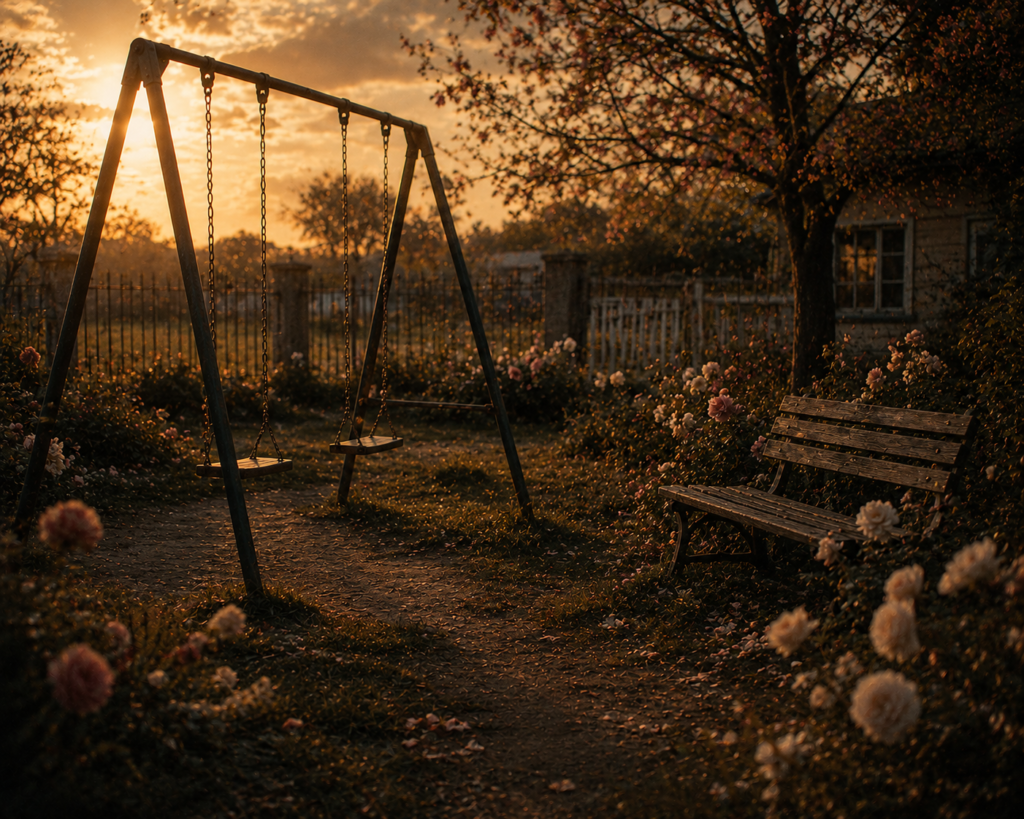
The Places That Carried Our Laughter
I think certain places become sacred because of the people attached to them.
A playground.
A café.
A hallway.
A field.
A garden.
To outsiders, they may appear ordinary.
But for someone carrying memory, those places hold entire versions of life inside them.
I wrote this section while thinking about how difficult it is to revisit places after relationships change.
Not because the locations themselves are painful—
but because they no longer feel inhabited in the same way.
There are places I can revisit physically but never emotionally return to.
And maybe that is what this part truly means:
Some places only exist fully when shared with someone else.
Once the connection disappears, the place becomes quieter.
Something incomplete.

Shared Memory as Emotional Architecture
Part 4 explores how relationships shape emotional geography.
Memory does not only attach itself to people.
It attaches itself to:
locations
objects
routines
environments
ordinary moments repeated often enough to become sacred
The poem understands that grief can make familiar places feel hollow—not because they physically changed, but because shared meaning disappeared from them.
And so the subject continues walking through spaces still standing in reality,
yet partially gone in memory.
The Place Only Existed When Remembered Together
Sometimes, loss does not erase places.
It simply changes how they exist inside us.
The gardens remain.
The playground still stands.
The flowers continue blooming.
But without the person who once helped shape those memories,
even familiar places begin to feel like echoes—
half-present,
half-vanished,
waiting for a version of the past
that no longer arrives.
Continue Reading This Series
- Part 1 – The Alcove & The Beginning of Absence
- Part 2 – Footsteps Rehearsing their Leaving
- Part 3 – Echoes of Familiar Voices
- Part 4 – Places that Only Exist Together
- Part 5 – The Weather of Memory
- Part 6 – Storms, Windows, & The Persistence of Light
- Part 7 – Which Silence Holds You Now?
- Part 8 – Returning to the Field
- Part 9 – Returning to the Quiet