
The Courage to Release
After surviving the middle slump (Part 4: What to Do When You Want to Quit), comes the challenge of releasing your work.
Finishing a draft is one thing. Letting it go is another.
There comes a moment when the big edits are behind you, and all that’s left are commas, line breaks, tiny tweaks. You reread the same paragraph for the tenth time.
And suddenly, you wonder: are you refining—or are you avoiding release?
Perfectionism often disguises itself as dedication.
So how do you know when a story is truly done?
I. The Fear That Lingers After Finishing
You’ve finished the manuscript. Every chapter is in place.
And then fear shows up again:
“What if it’s not good enough?”
“Have I done enough?”
You obsess over editing, proofreading, polishing. You question whether your story is ready for the world—or if your own standards will reject it before anyone else sees it.
I remember sitting at my desk, manuscript in front of me, fingers hovering over the keyboard. My food gone cold. The room quiet except for the soft hum of the fan. That familiar tightness in my chest—the fear of releasing—never truly went away.
II. Signs Your Story Is Actually Done
These decisions build on the practice of showing up consistently in Part 2: Writing When You Don’t Feel Inspired.
You might not realize you’re done until you’re truly there.
Some signs:
- You’re tweaking sentences, not structure.
- You’re obsessing over details that don’t change the story.
- Changes feel cosmetic rather than transformative.
- You’re editing out of habit—or fear—rather than necessity.
If this resonates, your story may already be complete. You just haven’t let yourself release it yet.
III. Polish vs. Procrastination: Knowing the Difference
Polish is purposeful. You make edits that genuinely strengthen the work: smoothing dialogue, adjusting phrasing, fixing pacing.
Procrastination masquerades as polish. It shows up as:
- Tweaking unnecessary details.
- Over-editing to avoid letting go.
- Prolonging the agony under the guise of “making it better.”
Learning the difference is part of finishing a story.
IV. Letting It Go: The Bravery of Completion
Letting a story go is an act of courage.
I remember finishing a manuscript after I’ll Stay. I couldn’t stop retouching, polishing. Every time I thought it was ready, a new doubt crept in.
Eventually, I learned: done doesn’t mean flawless—it means ready enough. It means letting your creation leave your hands and exist in the world, imperfections and all.
I hit “Save” one last time and leaned back. My chest tight. My mind racing. And then—relief. The story was done. In that moment, letting it go felt like the bravest thing I had done in months.
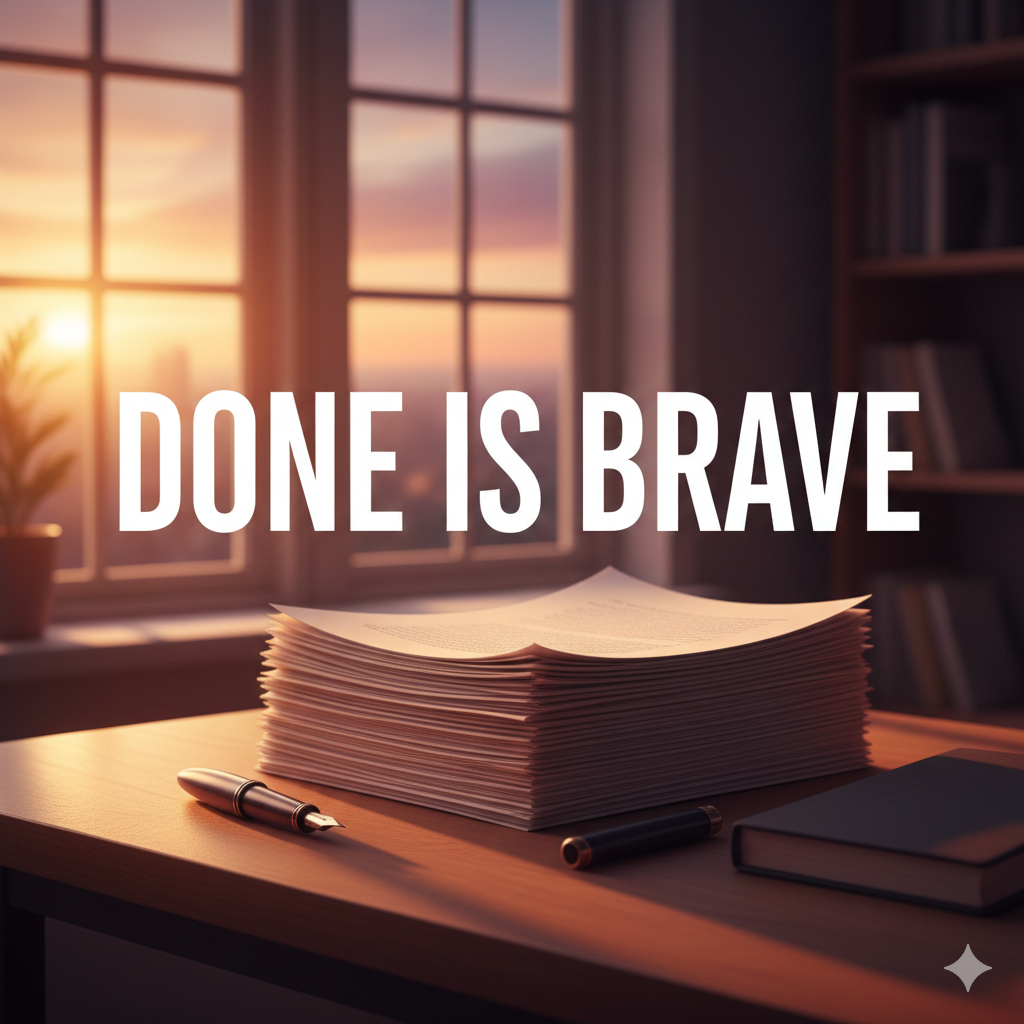
V. Done Is Brave
“Done is brave.”
A story is rarely perfect. But it can be complete.
When your revisions shift from strengthening the work to soothing your fear, it’s time to let it stand.
Ready enough is brave.
A Gentle Invitation
If you’re staring at your manuscript, unsure whether to keep revising…
Ask yourself:
- Am I strengthening the story?
- Or am I stalling because of fear?
Take a breath. Step back. Let go.
And if you’re comfortable, share with me:
Have you ever released a story before you felt it was perfect? What helped you take that brave step?
Leave a comment below, or write to me through the mailbox section of this website.
Let’s normalize releasing our work—imperfections and all.
Take a final read-through of your current draft. Ask: Does this story express what I intended? If yes, consider it ready to share.
After recognizing when your story is done, learn when to rewrite versus start over in Part 6: Rewriting vs. Starting Over.
Continue the Series
If you found this helpful, continue exploring From Draft to Done:
- Part 1: How I Finished My First Manuscript
- Part 2: Writing When You Don’t Feel Inspired
- Part 3: Balancing a Full-Time Job and Writing
- Part 4: What to Do When You Want to Quit
- Part 5: Knowing When a Story Is “Done”
- Part 6: Rewriting vs. Starting Over
- Part 7: The Art of Final Edits
Or jump to the full series overview here: From Draft to Done Series
Explore more series in the Writer’s Nook!
[…] Part 5: Knowing When a Story Is “Done” […]
[…] Part 5: Knowing When a Story Is “Done” […]
[…] Part 5: Knowing When a Story Is “Done” […]
[…] choosing whether to start fresh, revisit Part 5: Knowing When a Story Is ‘Done’ to understand if your story is truly […]