
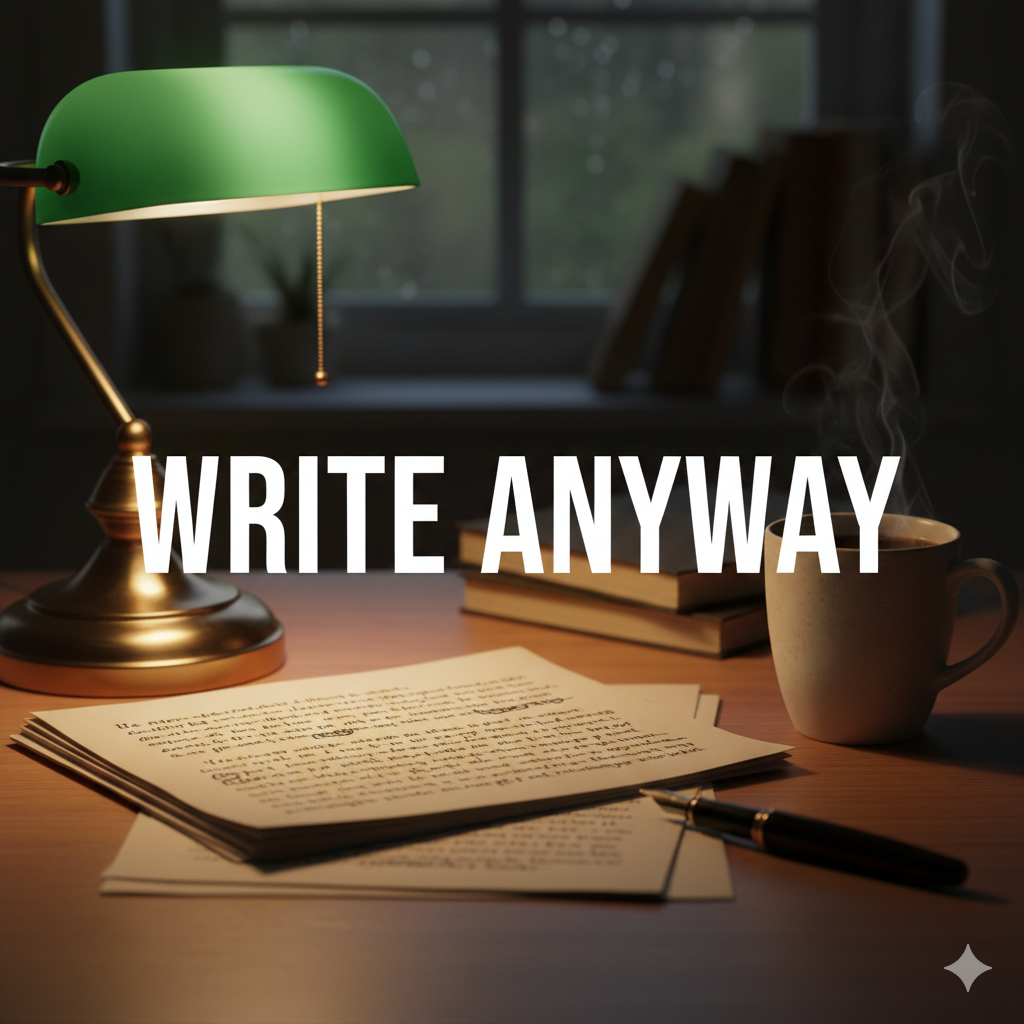
On the Days the Words Don’t Come
Can I tell you something?
There are days when writing feels like breathing.
The ideas arrive gently. The sentences line up. The story unfolds like it has been waiting for you all along.
And then there are the other days.
The days when the blinking cursor feels almost confrontational. When your mind is tired. When you reread yesterday’s paragraph and wonder if you’ve forgotten how to write entirely.
This is about those days.
Because if I waited to feel inspired, I would still be waiting.
If you missed it, Part 1: How I Finished My First Manuscript shows what finishing a draft really feels like.
I. The Myth I Believed About Inspiration
When I first started writing — especially when I wrote I’ll Stay — I truly thought writing would always feel that way.
That first manuscript flowed quickly. Smoothly. Almost effortlessly.
At the time, I thought that was how writing worked.
If it didn’t flow, maybe it wasn’t meant to be written.
I absorbed the same romanticized idea many aspiring writers carry:
That creativity is a mood.
That inspiration must strike first.
That real writers wait for the magic.
But then came the quiet days.
The days when the scenes wouldn’t form. When the characters felt distant. When the “voices” in my head were silent.
Some call it writer’s block.
I used to think it meant something was wrong.
Now I know it meant I was becoming a real writer.
II. The Moment I Almost Stopped
Let me be honest.
There was a day — maybe several — when I stared at my draft and thought about quitting.
I remember thinking,
“If it doesn’t feel inspired, maybe it isn’t good.”
That thought is dangerous.
Because it makes you believe that difficulty means failure.
But writing isn’t difficult because you’re incapable.
It’s difficult because you’re building something from nothing.
And building takes effort.
III. What Actually Helped Me Finish
When I couldn’t work on a manuscript, I wrote letters.
Small ones. Honest ones. Sometimes messy ones.
Those letters became outlines.
The outlines became drafts.
The drafts became finished pieces.
It didn’t happen because I felt inspired.
It happened because I kept showing up.
That’s when I learned something that changed everything:
Discipline matters more than mood.
Not in a harsh way.
Not in a rigid, punishing way.
But in a quiet, steady way.
The kind that says,
“I may not feel good today, but I will write anyway.”
For insights on managing energy and time, see Part 3: Balancing a Full-Time Job and Writing.
IV. If You Don’t Feel Inspired, Try This
Let’s make this simple.
1. Write Badly
Give yourself permission to write something terrible.
Some of my early drafts were overwritten. Dramatic. Full of dialogue that made me cringe when I reread it.
Most of it never made it to the final version.
But it helped me begin.
And beginning is the hardest part.
2. Write Smaller Than You Think You Should
You don’t need 3,000 words.
You need progress.
Five hundred words is enough.
Even three hundred.
Even one honest paragraph.
Small progress builds momentum.
3. Lower the Expectation, Not the Commitment
When I’m inspired, I can write for four to seven hours.
When I’m not, I set a smaller promise:
At least two focused hours.
Sometimes it feels heavy.
But I sit down anyway.
And almost every time, something shifts after I start.
Not before.
After.
V. The Truth About Inspiration
Here’s what I’ve come to believe:
Inspiration doesn’t lead to action.
Action leads to inspiration.
When you start typing — even reluctantly — your brain follows. A sentence appears. Then another. Then an idea you didn’t expect.
Inspiration visits action.
Not hesitation.
And I promise you, every writer you admire has written through days when they felt unmotivated. Uninspired. Doubtful.
The difference is not talent.
It’s endurance.
VI. A Quiet Truth I Wish Someone Told Me Earlier
Inspiration is beautiful.
But it is unreliable.
What carries a manuscript forward is not a lightning strike of brilliance. It is the quiet decision to sit down and continue — even when you feel unimpressive.
Even when the words feel average.
Even when you are unsure.
Sometimes inspiration arrives after you begin.
Sometimes it rewards consistency.
But it rarely rewards waiting.
Before You Close This Tab
If you’re reading this while avoiding your draft, consider this your gentle nudge.
Open the document.
Write one sentence.
Not a perfect one.
Just a real one.
And if you’re comfortable, tell me —
what are you working on right now? A novel? A poem? A letter you haven’t sent?
You don’t have to wait to feel inspired.
Start small.
Start messy.
Start anyway.
Because inspiration often visits the writers who are already at their desks.
And maybe today, that writer is you.
Today, commit to writing for 10–20 minutes, even if it feels forced. Notice how momentum follows showing up, not waiting.
he next step in the series, Part 4: What to Do When You Want to Quit, addresses the breaking points every writer faces.
Continue the Series
If you found this helpful, continue exploring From Draft to Done:
- Part 1: How I Finished My First Manuscript
- Part 2: Writing When You Don’t Feel Inspired
- Part 3: Balancing a Full-Time Job and Writing
- Part 4: What to Do When You Want to Quit
- Part 5: Knowing When a Story Is “Done”
- Part 6: Rewriting vs. Starting Over
- Part 7: The Art of Final Edits
Or jump to the full series overview here: From Draft to Done Series
Explore more series in the Writer’s Nook!
[…] Writing When You Don’t Feel Inspired […]
[…] Building momentum even on tired days connects back to Part 2: Writing When You Don’t Feel Inspired. […]
[…] If you want to see how to keep going when words don’t come, check out Part 2: Writing When You Don’t Feel Inspired. […]
[…] These decisions build on the practice of showing up consistently in Part 2: Writing When You Don’t Feel Inspired. […]
[…] endurance I discuss here echoes the lessons from Part 2: Writing When You Don’t Feel Inspired and Part 3: Balancing a Full-Time Job and […]
[…] stage builds on endurance and showing up, taught in Part 2: Writing When You Don’t Feel Inspired and Part 3: Balancing a Full-Time Job and […]