
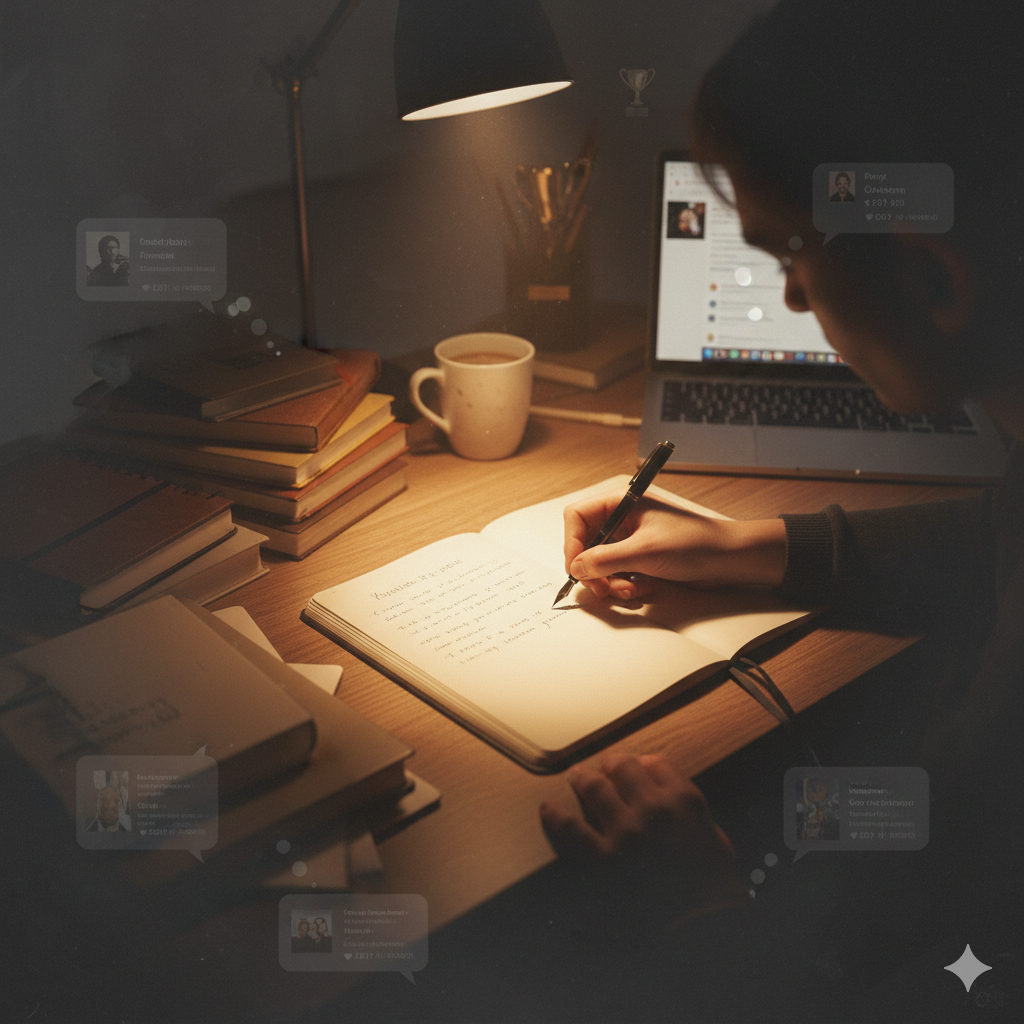
I. The Quiet Threat of Comparison: How Envy Steals Your Creative Joy
Comparison often appears after we begin sharing our work publicly. If visibility feels intimidating, you may want to read The Courage to Share Your Writing.
I came home after a stressful duty, lay on the bed, and mindlessly scrolled through social media.
I saw:
- A friend building a house.
- A high school classmate posting pictures of her kids.
- Friends traveling monthly.
- A teacher getting engaged.
And I thought: “Everyone’s really living.”
Envy surfaced, along with fear.
What if I never do what makes me happy?
Comparison—subtle, silent, relentless—can crush creativity before it even begins.
This is the fifth part of Series 2: Writing Through Fear: How to Create with Confidence as an Anxious Overthinker.
II. Why Social Media Makes Comparison Inevitable
Seeing other writers’ achievements can intensify imposter syndrome, which we explored earlier in this series.
In today’s digital world, comparison is nearly unavoidable:
- Social media: Platforms show polished highlights, not the messy reality.
- Highlight reels: We see finished work, not drafts, mistakes, or effort behind it.
- Metrics culture: Likes, shares, and comments can become toxic benchmarks of worth.
Remember: Comparison may masquerade as motivation, but it silently steals your joy.
III. The Hidden Cost of Comparing Your Creative Journey
Comparison can stop writers from even beginning. In the Beginner’s Guide for Writers, we discussed how fear of starting can delay creative work indefinitely.
Unchecked comparison has serious creative consequences:
- Paralysis: Freezing because your work feels “not enough.”
- Resentment: Envying others’ success instead of celebrating your own progress.
- Creative burnout: Overworking and overthinking to match someone else’s pace.
Comparison doesn’t just steal your peace; it steals your story.
IV. Healthy vs. Harmful Comparison: Fuel Creativity, Don’t Kill It
Comparison itself isn’t bad—intention matters:
- Healthy Comparison = Inspiration
- Study techniques, read widely, and learn from peers.
- Let admiration fuel curiosity, not insecurity.
- Harmful Comparison = Self-Erasure
- Measuring your worth against someone else’s highlight reel.
- Letting envy and fear silence your creativity.
Be your own hero. Create your own role.
Instead of comparing progress, focus on your own growth as a writer—something that develops through consistent practice and imperfect drafts, as discussed in How to Write Even When You’re Afraid.
V. 3 Practical Steps to Stop Comparison and Reclaim Your Creativity
1. Curate your feed
- Follow accounts that uplift, inspire, and teach—avoid triggers.
2. Study, don’t scroll
- Analyze writing techniques instead of mindlessly comparing.
3. Track your own timeline
- Celebrate progress: finished drafts, published posts, and new ideas.
- Your journey is yours alone.
VI. A Gentle Reminder: Protect Your Pace and Creative Flow
Comparison is a shadow that lurks quietly, but it does not define you.
By setting boundaries, focusing on your own work, and celebrating small wins, you reclaim your creativity.
“Your pace is not a flaw. It is your rhythm.”
Share one way you overcome comparison in your creative life in the comments below!
Continue Reading the Writing Through Fear Series
If this article resonated with you, explore the rest of the series for anxious and overthinking writers:
• What If I’m Not Good Enough? Overcoming Self-Doubt as a Writer
• How to Write Even When You’re Afraid
• Imposter Syndrome in Writers: Why You Feel Like a Fraud
• The Courage to Share Your Writing
• How Comparison Silently Kills Creativity
• Rejection Is Not a Verdict: Handling Criticism and Setbacks
• Turning Fear into Fuel: Using Anxiety to Strengthen Your Writing
You can also explore the full guide here:
Writing Through Fear: How to Create with Confidence as an Anxious Overthinker
Or start from the beginning with the Beginner’s Guide for Writers series, where we explore how the writing journey begins.
Explore more series in the Writer’s Nook!
[…] Syndrome in Writers: Why You Feel Like a Fraud• The Courage to Share Your Writing• How Comparison Silently Kills Creativity• Rejection Is Not a Verdict: Handling Criticism and Setbacks• Turning Fear into Fuel: […]
[…] yourself to other writers is a common trigger of imposter syndrome. In How Comparison Silently Kills Creativity, we explore how constant comparison can drain creative […]
[…] Writing is deeply subjective, which is why comparing yourself to others can be harmful—a theme explored in How Comparison Silently Kills Creativity. […]
[…] Many writers begin seeking validation through reactions and metrics. However, comparison can silently undermine creativity—something we explore in How Comparison Silently Kills Creativity. […]
Jilibosscasino! Been spinning those reels lately, and gotta say, the selection is awesome. Good bonuses too. Give it a shot, you might get lucky! jilibosscasino
Joya9tv is a good way to kill some time. I like watching when I don’t want to play. A different approach that keeps things interesting. joya9tv
Jilivip6 is my new favorite spot. They have a ton of games and the payouts are pretty good. Been having a lot of fun here lately: jilivip6
[8998]7bets | Link vào trang chủ và casino trực tuyến uy tín,7bets cung cấp link vào trang chủ nhanh chóng, hỗ trợ tải app 7bets tiện lợi và hướng dẫn cách nạp tiền qua momo đơn giản. Truy cập ngay để trải nghiệm. visit: 7bets