
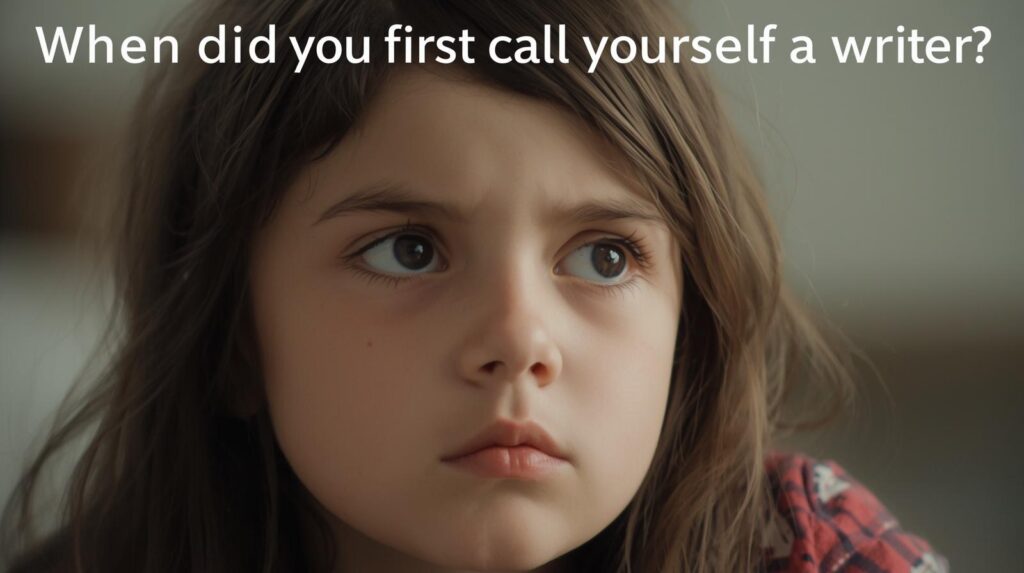
This is Part 1 of my series on BEGINNER’S GUIDE FOR WRITERS.
I. Where It All Began
I began my formal education in the humble primary school of my hometown—Mulliang Primary School. When I was in first grade, the school only offered classes up to fourth grade. By the time I reached fourth grade, it expanded to include fifth and sixth. Eventually, it became Mulliang Elementary School.
That alone tells you something about the kind of community I grew up in.
In third grade, we were taught to write formal compositions in both English and Filipino. Aside from that, we were required to keep journals and diaries, submitted every Friday.
With chubby fingers wrapped around a pen, I scribbled in my notebook about the ordinary details of my day—waking up early, eating breakfast, preparing for school, walking there, playing with friends, going home for lunch, finishing afternoon classes, playing again, eating dinner, then sleeping. Rinse and repeat.
It was at that age that I became fascinated with language.
I think the greatest influence on my love for words was my mother—my first teacher. She taught me how to read and write long before I stepped into first grade. My parents bought collections of Filipino and English fables. We had encyclopedias, dictionaries, and atlases that young me loved to skim through, even if I did not fully understand everything I read.
Even after diaries were no longer required, I continued writing. Some days, I scribbled on loose sheets of paper, transcribing my thoughts and feelings simply because I wanted to.
In the late 2000s, when I was still in elementary school, girls my age had crushes. Courtship came in the form of handwritten letters and folded notes. It was silly, perhaps—but at the time, it made me giddy to receive love letters from unsuspecting suitors.
I received my fair share of them.
And so I began writing not only for myself but also in response to those letters.
Then high school came. In the early 2010s, during seventh grade, I recognized my love for writing more consciously. I joined the editorial board as a junior writer in our school’s official publication. Two years later, I was promoted to Editor-in-Chief.
I owe much to my English teachers then, who helped me refine my skills. High school pushed me further—to join my college publication, where I eventually became Editor-in-Chief during my junior year.
Journalistic writing aside, I discovered that I was more drawn to creative writing. Simply because I was writing the kind of stories I wanted to write—and the kind I wanted to read.
For years, I called myself a writer because I had written countless poems, stories, and letters. But it was when I finished my first short story, “I’ll Stay,” at fourteen, that I truly told myself: I can be a writer.
The weight of that forty-page manuscript felt heavier than it should have in my hands. It had taken me a month to process the story—to sit with it, turn it over in my mind, let it settle—before I finally finished it in one sitting.
My fingers ached by the end. My hand cramped around the pen. The pages were filled with shaky, slightly illegible cursive, each line proof of how badly I needed to get the story out before I lost the courage to finish it.
My arms hurt.
But the euphoria of finishing something—that was a different kind of accomplishment.
I was never known for holding my attention for long. But when I hyperfocus, I can do things that surprise even me.
Years later, I lost the original copy of that manuscript — a process I explore further in Part 4 – Why Your First Draft is Messy (And Why That’s Perfect). In college, I revisited the story and improved it.
And yet, until now, I still hesitate to call myself a writer.
II. The Weight of the Word “Writer”
Over the years, I have met writers from different walks of life—lyrical geniuses, poets, and storytellers. We would talk about how we discovered our love for writing, the books we cherished, and our creative routines.
Conversations flowed easily—until someone asked:
“Do you claim to be a writer?”
It was a simple question. But it unsettled me.
For a long time, I answered “No,” even though I had written essays, poems, and stories. I didn’t deny being a writer because I lacked skill or passion. I denied it because I believed publication meant legitimacy.
I thought: I am only a writer if I publish my work.
Without something tangible to prove it, I felt unqualified to claim the title.
So I delayed calling myself a writer—for years.
There was fear in saying “Yes.” Fear of the follow-up question:
“What did you write?”
“I want to read it.”
There was hesitation. Fear of judgment. Shame on claiming something without proof.
I felt I did not have the right.
Years later, I realized something awakening.
I should have been proud. I had written numerous poems and stories. I had finished manuscripts. I was close to being a “writer”—minus publication.
That was when I encountered the idea of external and internal validation.
External validation is recognition from others:
“You write so well.”
Getting published.
Winning awards.
High blog engagement.
Book sales.
Praise from mentors.
It confirms your legitimacy. You are seen.
But the danger is this: if your identity as a writer depends entirely on external validation, your confidence rises and falls with other people’s reactions.
No likes? You question yourself.
No acceptance email? You doubt your talent.
Silence? You wonder if you are even a writer at all.
Internal validation, however, is the belief that you are a writer because you write—regardless of who is watching. I discuss the challenge of starting before you feel ready in Part 2 – Writing Before You Feel Ready, where I share how I overcame hesitation and fear.
It sounds like:
“I am proud of this piece.”
“This feels honest.”
“I showed up today.”
“Even if no one reads this, it matters to me.”
It is quieter. Less flashy. But far more stable.
You write because it aligns with who you are.
You create because it fulfills you.
You continue—even in silence.
External validation is not bad. It motivates. It encourages. It opens doors.
But it should be a bonus—not the foundation.
External validation is applause.
Internal validation is your heartbeat.
You can survive without applause.
You cannot survive without your heartbeat.
III. The Quiet Turning Point
When did I finally embrace being a writer?
When people began asking, “What do you do?” and I replied, “I write.”
Even without published books.
Even without proof.
Was it when I finished a manuscript? I don’t think so.
I finished manuscripts because I wanted to relive the joy I felt when I wrote “I’ll Stay” at fourteen. But after the initial sense of accomplishment, the feeling faded.
Was it when I became Editor-in-Chief in college? No.
If I am honest, I was not entirely proud of my performance then.
Was it when I launched this website?
Definitely.
But perhaps the real shift began earlier—when I started writing more stories in college simply because I wanted to. Not for publication. Not for validation. Just because I needed to write.
IV. The Truth About Identity
Here is a truth no one told me before:
You do not become a writer when others approve you.
You became a writer the moment you held a pen and scribbled on paper.
You became a writer when you kept writing.
No one can take that from you.
Even if they criticize your poem.
Even if they point out inconsistencies in your work.
Even if they do not understand your voice.
You are still a writer.
V. Questions for the Writer Within
Let me ask you something:
What makes someone a writer?
And more importantly—
Who are you waiting for permission from?
VI. A Final Affirmation
As I unpacked this, I found closure. I am no longer negotiating my identity as a writer.
Before I end, I want to leave you with the affirmation I return to whenever doubt begins to creep in:
“You were a writer the moment you began.”
I believe that now.
It is time for you to believe it too.
If you want to see how I continued growing as a writer and learning to embrace imperfection, check out Part 3 – The Myth of ‘Natural Talent’and Part 4 – Why Your First Draft is Messy.
If you’re ready to continue this journey with me, the next parts of the series explore the steps, struggles, and insights that shaped my growth as a writer:
-
Part 2 – Writing Before You Feel Ready: How I overcame hesitation and embraced action even when I didn’t feel fully prepared.
-
Part 3 – The Myth of “Natural Talent”: Why persistence matters more than innate talent in writing.
-
Part 4 – Why Your First Draft is Messy (And Why That’s Perfect): Learning to love imperfection and the process of drafting.
-
Part 5 – Writing as a Form of Self-Discovery: Strategies for revealing hidden emotions, clarifying your thoughts, and understanding yourself deeply.
-
Part 6 – The Fear of Being Seen: Overcoming Writer’s Anxiety and Self-Doubt: Reframing feelings of inadequacy while continuing to create.
-
Part 7 – Starting Without Permission: Embracing vulnerability and learning to share your writing confidently.
Each post builds on the previous one, guiding you step by step toward writing with confidence, courage, and heart.
You can jump to the full series overview here: The Beginnner’s Guide for Writers
Explore more series in the Writer’s Nook!
[…] When Did You First Call Yourself a Writer? […]
[…] When Did You First Call Yourself a Writer? […]
[…] When Did You First Call Yourself a Writer? […]
[…] When Did You First Call Yourself a Writer? Finding Your Writing Identity […]
[…] When Did You First Call Yourself a Writer? Finding Your Writing Identity […]
[…] When Did You First Call Yourself a Writer? Finding Your Writing Identity […]
[…] at the start with Part 1: When Did You First Call Yourself a Writer? to revisit your early writing […]
[…] When Did You First Call Yourself a Writer? Finding Your Writing Identity […]